Supporting Development Through Relationship
One of my favorite things about Natural Lifemanship is that it continues to change the way I see both horses and people. Recently, during a consultation, someone offered an analogy that immediately stayed with me. They asked me to imagine that someone walked up behind me and placed a live snake around my neck. My nervous system reacted before I even had time to think. Then they asked me to imagine something different. Instead of someone putting the snake on me, imagine they were simply holding it while I decided how close I wanted to get. I could stand twenty feet away. I could move a little closer, pause, step back, or become curious enough to eventually touch it. The snake had not changed, but my experience of it had changed completely.
That conversation immediately made me think about my own horse, Nora.
Lately, Nora and I have been working on changing her relationship with her girth, the piece of tack that wraps around her belly and holds the saddle in place. Most horses learn to tolerate having a girth tightened because that is simply what happens before they are ridden. But I found myself wondering what that experience might actually feel like from Nora's perspective. If my body would react so strongly to someone unexpectedly placing a snake around my neck, perhaps Nora's nervous system deserves the same curiosity when something wraps tightly around her body without her choosing it. The point is not that a girth is dangerous. The point is that development changes when we have a sense of choice and participation.
Rather than bringing the tack directly to Nora, I have begun inviting her to walk with me to where the tack hangs. She notices it before it comes toward her. She has the opportunity to orient to it, sniff it, pause, or simply stand nearby while we remain connected. Some days she walks confidently right over. Other days she slows down or hesitates. Every response tells me something about where her nervous system is on that particular day, and every response gives her brain another opportunity to build confidence rather than simply endure.
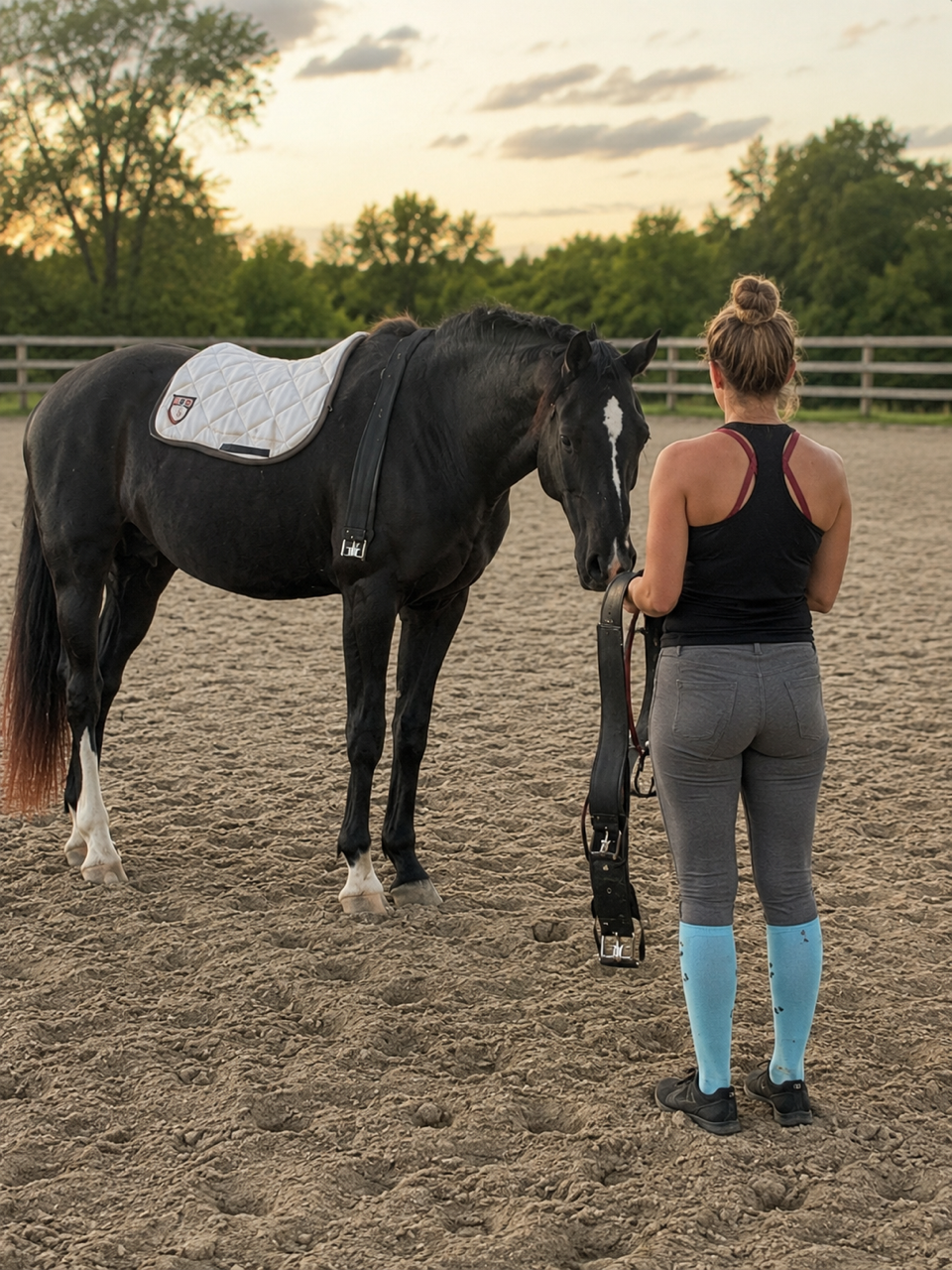
This is one of the core principles of Natural Lifemanship. We are not trying to create compliant horses or compliant people. We are supporting healthy development. That means asking both horses and humans to participate to the very best of their developmental abilities in this moment, not according to where we wish they were, not according to what they were capable of yesterday, and not according to our own timeline. Their readiness matters.
One of the questions I am asked most often is what the "rules" are in Natural Lifemanship. The truth is that there really are not many rules. There are principles. Principles give us a framework while still leaving room for relationship, curiosity, and flexibility. Every horse is different. Every person is different. One horse may be ready to walk directly to the tack, while another may simply be ready to look at it from across the arena. One therapy client may be ready to process a traumatic memory, while another may simply be ready to notice what happens in their body when they think about it. Neither response is better than the other. Both are developmentally appropriate.
This is also why I have learned that I never want to work harder than my horse or my client. If I drag Nora over to the tack, I may accomplish the task, but she misses the opportunity to choose. If I rush to answer every question for a client or convince them of what I think they should believe, I may temporarily reduce their discomfort, but I also rob them of the chance to discover something for themselves. The goal is not for me to do the work for them. The goal is to create the kind of relationship where they feel safe enough to participate in their own growth.
This does not mean abandoning someone to struggle on their own. Quite the opposite. It means remaining deeply connected while resisting the urge to rescue. It means trusting that growth happens when someone discovers they are capable of taking the next step themselves, no matter how small that step may be.
Trauma often teaches us that life happens to us. Healing invites us back into participating with life instead. Whether the "snake" is an actual snake, a saddle girth, a difficult conversation, or a painful memory, our nervous systems learn differently when they are invited rather than forced. We begin to move from fear into curiosity, from compliance into engagement, and from survival into genuine development.
That is the kind of learning I hope to cultivate every day, whether I am standing beside my horse in the arena or sitting with a client in the therapy room. Lasting change rarely comes from forcing ourselves through fear. More often, it begins when someone walks beside us, honors where we are today, and invites us to take one curious step forward when we are ready.
