Why the Human-Horse Relationship Supports Trauma Healing
Michaela Uttley, MS, LPC, CCTP
We know that trauma changes the brain. This is not because something is “wrong,” but because the nervous system adapted to survive.
For many trauma survivors, healing requires more than insight or talking through experiences. It requires new relational experiences that help the brain and body feel safe again. This is where the science behind equine-assisted therapy becomes especially meaningful.
Through the lens of the Neurosequential Model of Therapeutics (NMT), the relationship between humans and horses offers a powerful pathway for nervous-system regulation and trauma healing.
Trauma, the Brain, and Regulation
The Neurosequential Model of Therapeutics is based on a simple but critical understanding of the brain: the brain develops and heals from the bottom up.
When trauma (especially chronic or relational trauma) occurs, the lower parts of the brain responsible for survival and regulation can remain in a state of threat. In these moments, the thinking brain (language, logic, insight) has limited access. This is why trauma survivors often know they are safe, yet their body doesn’t feel safe.
Before deeper emotional or cognitive processing can occur, the nervous system needs experiences of:
Regulation
Rhythm
Safety
Connection
These experiences are relational, and they don’t always come through words.
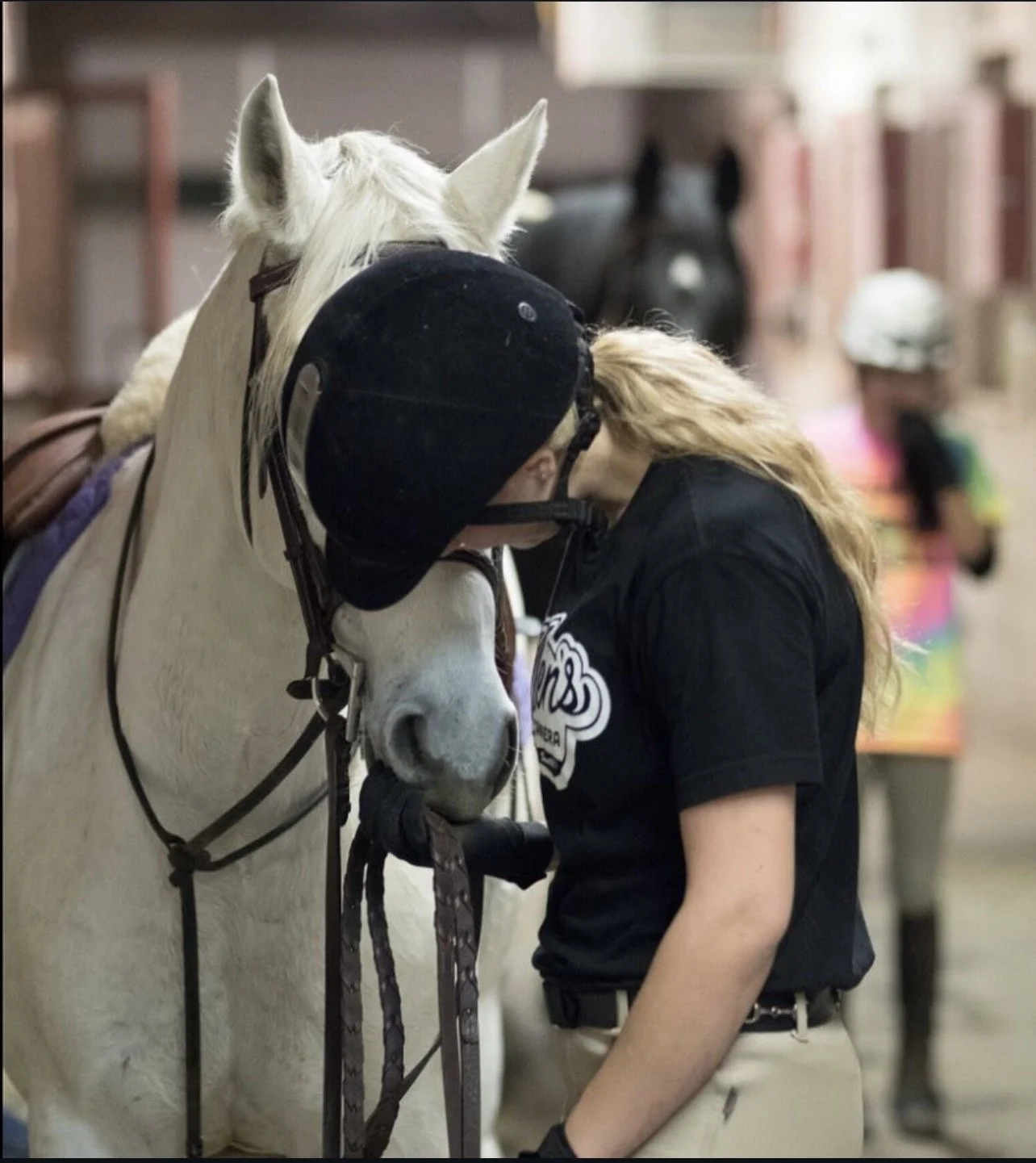
Why Horses Are Uniquely Regulating
Horses are prey animals with highly sensitive nervous systems. Their survival depends on accurately reading subtle changes in their environment, including the emotional and physiological states of others.
When humans interact with horses, several important things happen neurologically:
Nonverbal attunement: Horses respond to posture, breath, muscle tone, and emotional congruence rather than spoken language. They speak a language that lives beneath words. This engages the same lower brain networks involved in trauma and attachment.
Cross-brain regulation: Through proximity and interaction, the human nervous system begins to synchronize with the horse’s regulated state, supporting co-regulation.
Immediate feedback: Horses offer clear, honest responses without judgment or expectation, helping the nervous system learn cause-and-effect safely.
Relational safety: Because horses do not demand verbal explanation, performance, or emotional disclosure, many trauma survivors experience connection without pressure. Many clients with whom I’ve worked report at first feeling safer practicing “being with” the horse than with a human.
From an NMT perspective, this kind of interaction supports the brainstem and limbic systems first, creating the conditions necessary for healing, accessing higher regions of the brain, and developing cross-brain communication.
Regulation Through Relationship
Within Natural Lifemanship, the human-horse relationship is approached intentionally and ethically, with a focus on attunement, consent (from both human and horse), and nervous-system awareness.
Whether mounted or unmounted, equine-assisted work offers:
Rhythmic input that supports regulation
Opportunities for safe connection
Practice recognizing internal states
Experiences of mutual responsiveness
These relational experiences help strengthen neural pathways associated with safety and regulation, rather than threat. Over time, the nervous system learns something new: connection does not require hypervigilance, shutdown, or control.
Why This Matters for Trauma Healing
Healing trauma is not about revisiting the past repeatedly, it’s about creating new experiences in the present that allow the brain to reorganize.
From a neurosequential standpoint, equine-assisted therapy supports:
Increased nervous-system flexibility
Improved emotional regulation
Reduced reactivity and dissociation
Greater capacity for connection
As regulation improves, clients often find that talk therapy, EMDR, or other processing modalities become more accessible and effective.
A Science-Informed, Relational Path Forward
The healing power of the human-horse relationship isn’t mystical or accidental, it’s grounded in neuroscience, attachment theory, and an understanding of how the brain heals through experience. Humans and horses have lived in close partnership for over 5,000 years, and when people slow down enough to be present with a horse, many experience a sense of recognition rooted in the nervous system, responding to rhythm, attunement, and nonverbal connection that predates words and lives in our collective memory. For trauma survivors, working with horses can offer something many have not had before: a felt sense of safety in relationship.
And from that place, healing becomes possible.
