“We Won the Blue Ribbon, But We Were Both Falling Apart”
Equine EMDR Intensive Therapy for Eating Disorder Recovery
When I was younger, I was the girl who would do just about anything for horses. I cleaned stalls, scrubbed buckets, swept aisles, wrapped legs, and stayed late if it meant I might get a chance to ride or get additional horse time. I didn’t grow up with money for fancy barns or prestigious horse shows, so I learned early that if I wanted access to horses, I would need to work for it. I was proud of that. In many ways it feels like horses were my first, and most consistent home base.
Around the same time as my peak “horse girl” years, I was diagnosed with an eating disorder. What followed were years of treatment centers, outpatient programs, relapses, body image struggles, and trying to figure out how to live in a body that felt like the enemy all day every day and night. Through all of it, riding remained one of the only places where my mind could quiet down. Something about being with horses regulated me long before I had language for what regulation even was.
Later in life, when I finally had my own horse and the means to step into the rated hunter horse show world I had once admired from a distance, I thought I had made it. I had my horse, my tall boots, my show coat, my early mornings, my division numbers pinned to my back. I was in the ring I had dreamed about for years. What I did not expect was how quickly the old wounds would find me there.
There is a division in the hunter world called equitation where riders are judged on position, polish, and the overall picture they create on horseback. Anyone who has spent time in that world knows there is an unspoken body standard attached to it. Certain bodies fit the image more easily than others. Certain silhouettes are praised before the round even begins.
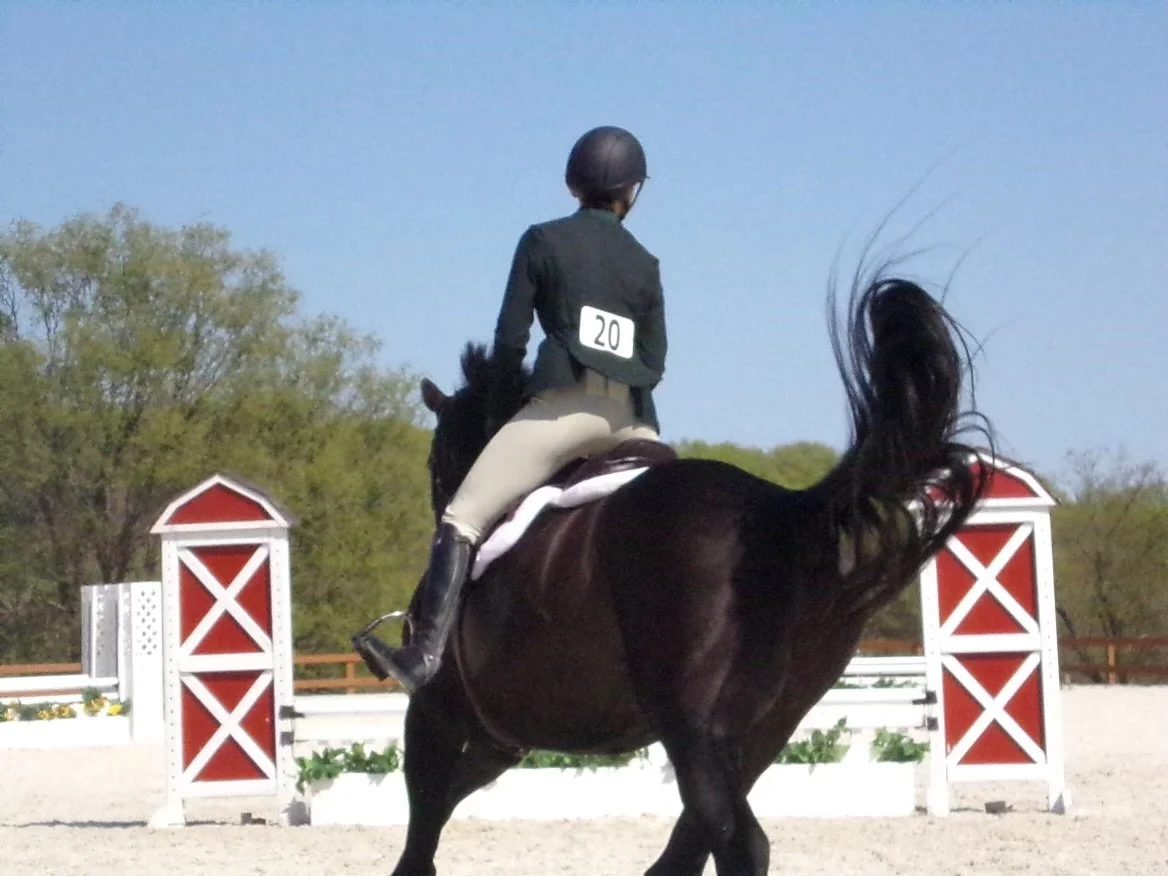
I remember one horse show in particular. I was deep in an eating disorder relapse and not doing well. My body was under so much stress and my mind was consumed. I was disconnected from myself in ways that were dangerous, though I did not fully admit that at the time. That day, I won every class in my division and finished as division champion. Everyone saw success, while I felt hollow as I gasped to Nora “we won!”.
It took me years to understand what was happening. The less connected I was to myself, the easier it was to become exactly what that environment rewarded. I was disciplined, quiet, controlled, and hyper-focused on getting everything right. I could override hunger, exhaustion, emotion, fear, and pain. I could make myself small and agreeable. Those same skills looked beautiful in the show ring and literally aided in us winning.
But they also shaped the way I related to my horse. Sure, Nora and I looked polished together. We were tidy, obedient, and effective. But underneath it, we were both operating from pressure and compliance. I was asking her to perform with precision while I was abandoning myself in the process. She knew her job, I knew mine, and we got results. But there is a kind of sadness in being praised for something that is hurting you. Or even killing you slowly.
Over time, Nora started speaking more clearly to me. When I brought out the tack (saddle and bridle), she would pin her ears. When I tightened the girth, she would swing her head and threaten to bite. She was not being bad, she was just communicating to me. She was telling the truth about something I had not yet learned how to tell the truth about in myself.
I think a lot of humans know this feeling. You hold it together for a long time, doing what is asked, and keeping the peace. You may even perform well for a while. Then one day your body starts saying no in the only ways it knows how. For some that’s panic attacks, for others that’s an eating disorder, and still others it may be developing something like an autoimmune disorder.
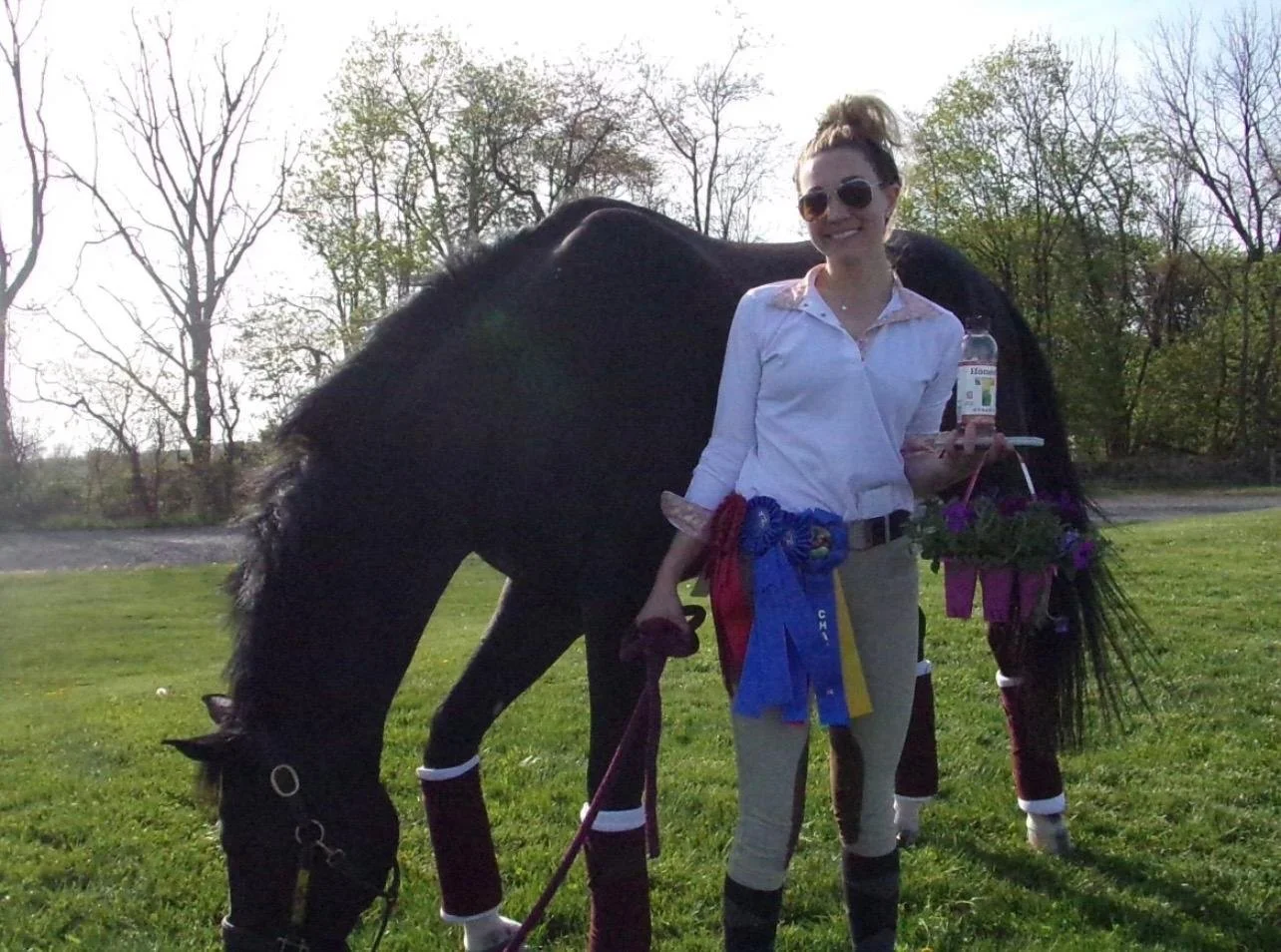
But these days, our life looks very different. We are at a quieter barn now, and I no longer measure our rides by ribbons or scores. I care more about how Nora feels when she sees the saddle than how pretty she looks in a show arena. I care whether she softens when I approach her, rather than grimacing. I wouldn’t want anybody grimacing at my approaching them, knowing as soon as I show up, their voice goes away. I, too, wouldn’t want to feel that way about somebody or something else.
I have used many of the same principles in healing my relationship with her that I use in my therapy practice through Natural Lifemanship, trauma therapy, and EMDR. I have been slowing down, noticing what is happening beneath the surface, honoring all behavior as sacred communication, and building trust in small moments. I no longer confuse shutdown with peace, or compliance with healing.
This lesson changed the way I work with people recovering from eating disorders and trauma as much as it changed the way I work with horses (and myself).
I know how easy it is to look like you are doing well while quietly falling apart. I know how easy it is to follow every rule in treatment and still carry the same pain home with you. I know how often people are praised for appearing recovered while feeling completely disconnected inside. Real recovery has never looked polished to me. It usually looks slower than people want, it asks for honesty over image, for relationship over performance, and for collaboration over control. It asks us to listen when the body says no. And that is something most of us have unfortunately been socialized so far away from, we don’t remember it’s an option until it’s too late.
That is why I offer equine EMDR intensives for women and queer adults recovering from eating disorders, body image struggles, trauma, and chronic self-abandonment. These private therapy intensives are designed for people who are ready for deeper healing than weekly therapy has been able to provide. Through equine therapy, EMDR, nervous system support, and relational healing, clients are invited back into connection with themselves in a way that feels grounded and lasting.
My equine EMDR intensives are especially supportive for women and LGBTQ+ clients healing from anorexia, bulimia, binge eating disorder, compulsive exercise, body shame, perfectionism, and trauma. Many clients come after years of talk therapy and are looking for a more immersive therapy experience that helps them heal at the root.
Sometimes I think about the ribbons I wanted so badly for so many years. And I understand that younger version of me; she was searching for worth in all the places she had been taught to look.
Now, the moments that matter most are quieter than that. Moments like Nora hearing the tack jingle and staying soft, a ride that feels connected not forced, a client recognizing their own needs for the first time, coming home to a body that no longer has to earn love through suffering. Those are the wins I know how to recognize now, and I love helping others begin to do the same.
